Foba - Column Stand
- Art: Stativ
The Foba column stand represents the pinnacle of precision and stability in professional photography and videography, designed to elevate the creative workflow of studios and demanding visual artists. Engineered for unwavering support and seamless adjustability, this robust studio essential ensures meticulous framing and consistent results, making it an indispensable tool for product photography, art reproduction, portraiture, and technical imaging where exact positioning and vibration suppression are paramount. Its superior build quality and intuitive operation provide an unparalleled foundation for critical photographic applications, allowing photographers to focus entirely on their craft without compromise.
CONSTRUCTION AND STABILITY
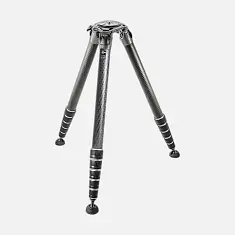
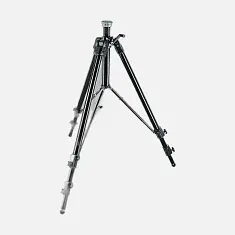
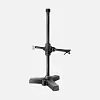
At its core, the Foba column stand is crafted from high-grade materials, engineered for maximum rigidity and vibration dampening. The central column, often precision-machined, is designed to glide smoothly yet lock securely at any desired height, ensuring repeatable positioning. The base is typically heavy and broad, providing an incredibly stable footprint that counteracts any potential tipping or movement, even with heavy camera setups and large format cameras. The entire structure is meticulously balanced, contributing to its renowned stability.
Construction: Features heavy-duty, robust metal construction, often aluminum or steel alloys, chosen for their strength-to-weight ratio and inherent vibration-absorbing properties.
Base Design: Incorporates a wide, stable base, frequently featuring adjustable leveling feet to compensate for uneven studio floors, ensuring the entire setup remains perfectly plumb and stable.
Finish: The surfaces are treated with a durable, scratch-resistant finish, typically a powder coat or anodization, which protects against wear and tear in a busy studio environment and maintains a professional appearance.
ADJUSTABILITY AND PRECISION
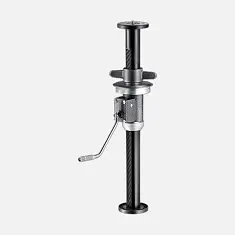
The hallmark of a Foba column stand is its exceptional precision and ease of adjustment, allowing photographers to achieve exact camera positioning with minimal effort. The mechanism for vertical movement is engineered for buttery-smooth operation, often incorporating counterweight systems or geared columns to effortlessly raise and lower even the heaviest camera rigs. Horizontal camera arm extensions and precise head adjustments further enhance its versatility, enabling intricate compositions and angles.
Vertical Adjustment: Utilizes a finely geared or counterbalanced column mechanism, ensuring smooth, precise, and effortless vertical movement of the camera carriage. Locking mechanisms are robust and designed for quick, secure operation.
Camera Carriage: The sliding camera carriage often features an integrated spirit level for accurate leveling and accepts various professional camera heads via standard mounting threads (e.g., 3/8"-16). Some models may offer adjustable friction controls for controlled movement.
Horizontal Arm: Many Foba stands include a substantial horizontal camera arm that can be extended and rotated, providing extensive reach and overhead shooting capabilities, crucial for flat lay photography or product shots from unique angles.
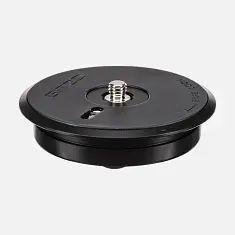
Mounting System: Equipped with universal mounting plates or industry-standard screws to accommodate a wide range of tripod heads, including geared heads, ball heads, and pan-tilt heads, allowing for tailored control over camera orientation.
ERGONOMICS AND WORKFLOW
Designed with the professional user in mind, the Foba column stand integrates ergonomic features that streamline the photographic workflow and enhance user comfort. Controls are intuitively placed and engineered for easy manipulation, even under heavy loads. The robust construction minimizes maintenance requirements, while the thoughtful design allows for efficient setup and breakdown, crucial in fast-paced studio environments. Cable management solutions are often incorporated to keep the workspace tidy and safe.
Control Layout: All adjustment levers and knobs are strategically placed for easy access and intuitive operation, often featuring ergonomic grips for comfortable use.
Cable Management: Integrated or optional cable clips and channels help manage camera and power cables, preventing entanglement and ensuring a clean, safe working area.
Portability (Relative): While primarily designed for studio use, some models might offer modular designs allowing for easier disassembly and relocation within a studio or between fixed locations.
COMPATIBILITY AND VERSATILITY
The Foba column stand is designed to be a highly versatile platform, compatible with a vast array of photographic equipment, from mirrorless cameras and DSLRs to medium and large format systems. Its substantial weight capacity ensures it can confidently support heavy camera bodies, long lenses, and specialized studio accessories without compromising stability. This broad compatibility makes it a central piece of equipment for various photographic disciplines.
Camera Compatibility: Universally compatible with virtually all professional camera systems, including DSLRs, mirrorless cameras, medium format, and large format cameras, when paired with appropriate camera heads.
Accessory Mounting: Often features additional mounting points or accessory trays for attaching monitors, tethering stations, or lighting equipment, further enhancing its utility as a central studio workstation.
Studio Environment: Ideally suited for fixed studio installations, offering a permanent and reliable support system for repetitive tasks, precise compositions, and demanding technical photography.
CLASSIFICATION
The Foba column stand is unequivocally classified as a premium professional studio support system, specifically falling into the category of a "Geared Studio Column Stand" or "Heavy-Duty Studio Tripod System." It transcends the capabilities of conventional tripods through its unparalleled vertical travel, exceptional load capacity, and superior vibration dampening. Unlike portable field tripods, its primary design emphasizes absolute rigidity, precise geared movements, and stable, controlled adjustments within a fixed studio environment, rather than portability. It is engineered for critical imaging applications where minute adjustments, unwavering stability, and long-term reliability are paramount, such as high-end product photography, fine art reproduction, macro photography, and technical imaging where optical axis alignment and consistent camera positioning are non-negotiable. Its robust construction and sophisticated mechanics place it firmly at the apex of studio support equipment, catering to professional photographers and institutions that demand the utmost in precision and performance from their gear.